When a Tree Becomes a Danger: What to Know About Hazardous Removal
Trees add beauty, shade, and value to a property. But when a tree is dead, diseased, or leaning dangerously after a storm, it quickly changes from an asset to a liability. Removing a hazardous tree is not like pruning a branch or cutting down a healthy specimen. It requires careful planning, the right equipment, and a clear understanding of the risks involved. This article explains what makes a tree dangerous, when removal becomes necessary, and what the process of dangerous tree removal involves for a typical residential or light commercial property.
Spotting a Hazardous Tree Before It Falls
Not every tree with a few dead branches is a hazard. But certain warning signs are hard to ignore. A large crack in the trunk, a pronounced lean that has recently worsened, or dead branches hanging high in the canopy all point to potential failure. Trees that have lost a significant portion of their root system due to construction, erosion, or disease are also prime candidates for removal. After a heavy storm, a tree that was fine a week ago may now be unstable. Walking around the base and looking up can reveal problems early, but some issues, like internal decay, are invisible from the outside. Jasper Tree Removal
When a tree is near a house, driveway, power line, or other structure, the stakes are higher. A tree that would cause no damage if it fell in an open field becomes a serious concern when it overhangs a bedroom or a parked car. Professional assessment often involves checking for signs of fungal growth, peeling bark, cavities, and the overall structure of the tree. If the tree is too close to a building or has multiple defects, removal is usually the safest option.
Why Removal Is Different from Routine Trimming
Routine trimming involves cutting live branches to shape the canopy or remove low-hanging limbs. The work is predictable, and the tree remains standing. Dangerous tree removal is the opposite. The tree is often compromised, meaning it can fail at any moment. The arborist cannot simply climb it as usual because the trunk might split under their weight. The branches may be brittle, or the entire tree may be leaning against another tree or a structure. Every cut changes the balance of the tree, and one wrong move can bring it down unexpectedly.
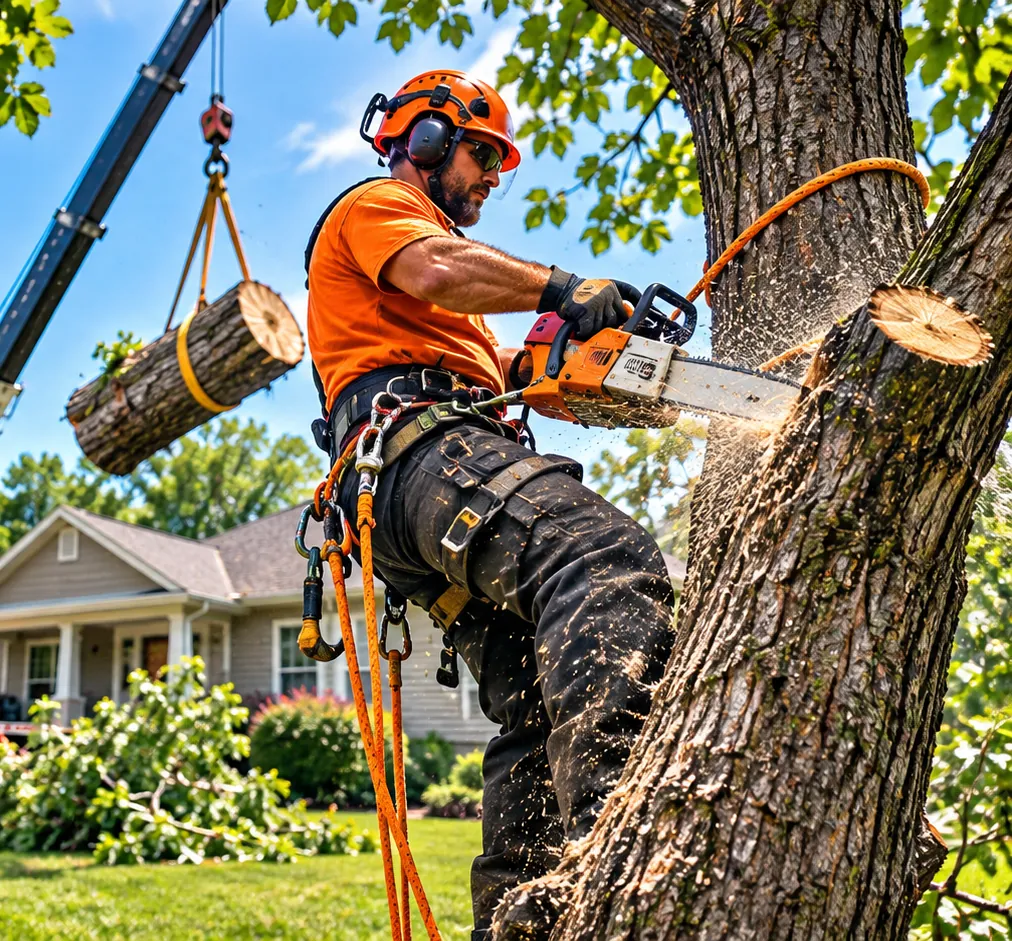
Because of these uncertainties, dangerous tree removal relies heavily on rigging and controlled cutting techniques. Ropes, pulleys, and sometimes cranes are used to lower sections of the tree safely to the ground. The goal is to dismantle the tree piece by piece, starting from the top and working downward, so that no single section falls freely. This process requires experience and a deep understanding of weight distribution and leverage.
The Role of Climbing and Rigging
For a tree that is still upright but unstable, climbing may be the only way to reach the upper canopy safely. A climber uses ropes and harnesses to move through the tree, attaching rigging lines to large limbs before cutting them. The rigging line is controlled from the ground, allowing the crew to lower heavy sections in a controlled manner. This prevents the limb from swinging into a window or landing on a fence. In some cases, the tree is so precarious that the climber cannot safely enter it. Then the crew must use a bucket truck or a crane to reach the high parts from outside the tree.
Rigging is particularly important when trees are tangled in utility lines or overhanging a roof. The arborist must cut each piece so that it can be lowered without hitting anything below. This is slow, methodical work. It is also why dangerous tree removal costs more than a simple tree felling. The time and skill required to dismantle a tree safely in a tight space are far greater than dropping a tree in an open field.
Storm Cleanup and Emergency Situations
After a severe storm, trees can be snapped, uprooted, or hung up in other trees. Emergency removal focuses on making the property safe as quickly as possible. That often means removing the most immediate threats first, such as a tree leaning on a house or blocking an access road. The rest of the cleanup can happen at a more measured pace. In these situations, the arborist must work quickly but still safely. A tree that is partially uprooted or twisted is under tremendous tension. Cutting it incorrectly can release that energy violently, causing the tree to spring or roll.
Professionals use techniques like bore cutting and release cuts to control the movement of the wood. They read the lean, the cracks, and the weight distribution to predict how the tree will react. This is not guesswork. It is based on years of field experience and a solid understanding of physics. For the property owner, the best course of action during a storm emergency is to stay clear of the damaged trees and call a professional service that can respond quickly.
When Stump Grinding Is Part of the Job
Once the tree is down, the stump remains. For most people, a stump is an eyesore and a tripping hazard. It can also attract pests like termites and carpenter ants. Stump grinding removes the stump below ground level, allowing the area to be seeded or landscaped. The grinder chews the wood into small chips, which can be used as mulch or hauled away. Grinding is usually straightforward, but if the tree was removed because of disease, the chips should not be used near other trees. Some pathogens survive in wood chips and can infect new plants.
Deciding whether to grind the stump depends on the future use of the space. If you plan to plant a new tree, grinding gives you a clean area to work with. If the stump is in a remote corner of the yard, it may be left to decay naturally. But for most residential properties, grinding is a practical finishing step after dangerous tree removal.
Lot Clearing and Large-Scale Projects
Sometimes the need for removal goes beyond a single tree. Lot clearing involves removing multiple trees and brush from a piece of land, often for construction or landscaping. While this work is less delicate than removing a single hazardous tree near a house, it still requires careful planning. Trees can be tangled together, and the ground may be uneven or muddy. A crew must decide the best direction for each tree to fall, accounting for the slope, the wind, and the surrounding vegetation.
Clearing a lot also produces a large volume of debris. The wood can be cut into firewood, chipped, or hauled away. Some trees may be salvageable as lumber, but trees that are twisted, diseased, or full of metal objects from old fences are not worth milling. The priority in lot clearing is safety and efficiency. A skilled team can clear an acre in a day or two, depending on the density of the trees and the accessibility of the site.
For homeowners in Jasper and Pickens County, Georgia, the combination of wooded lots and seasonal storms means that dangerous tree removal is a recurring need. A tree that looks healthy in the spring can become a hazard after a summer thunderstorm or a winter ice event. Regular inspections by a qualified arborist can catch problems early, but when a tree becomes an immediate threat, prompt action is the only safe response. Jasper Tree Removal provides 24/7 residential and light commercial tree removal, trimming, stump grinding, storm cleanup, climbing, rigging, and lot clearing in Jasper and Pickens County, Georgia. Their team understands the local terrain and the common tree species in the area, which helps them assess risks accurately and work efficiently.
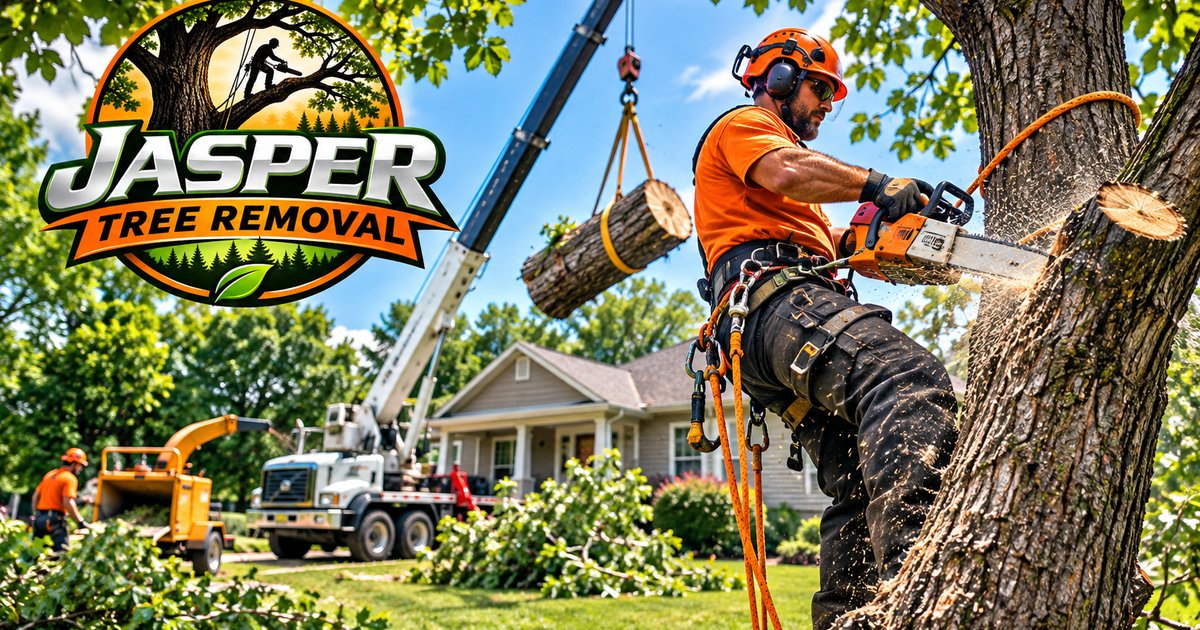
Whether you are dealing with a single leaning oak or a property full of storm-damaged pines, the principles of dangerous tree removal remain the same. Assess the tree, plan the cuts, control the fall, and clean up the debris. The difference between a routine job and a dangerous one is often a matter of feet, inches, or the angle of a crack. That is why it pays to trust the work to professionals who do it every day. Jasper Tree Removal has the equipment and experience to handle these situations safely, so you do not have to put yourself at risk.
A dangerous tree does not give you a second chance. If you see warning signs, call a professional before the tree makes the decision for you. The cost of removal is small compared to the cost of repairing a damaged roof or, worse, an injury. Take the time to look up at your trees after a storm. If something looks wrong, it probably is.
Jasper Tree Removal on social media
 Twitter
 Instagram
 YouTube
Corrections
Spot something wrong? Send it to the desk and it gets fixed in the open.